Designing a smart wearable device to monitor health biometrics
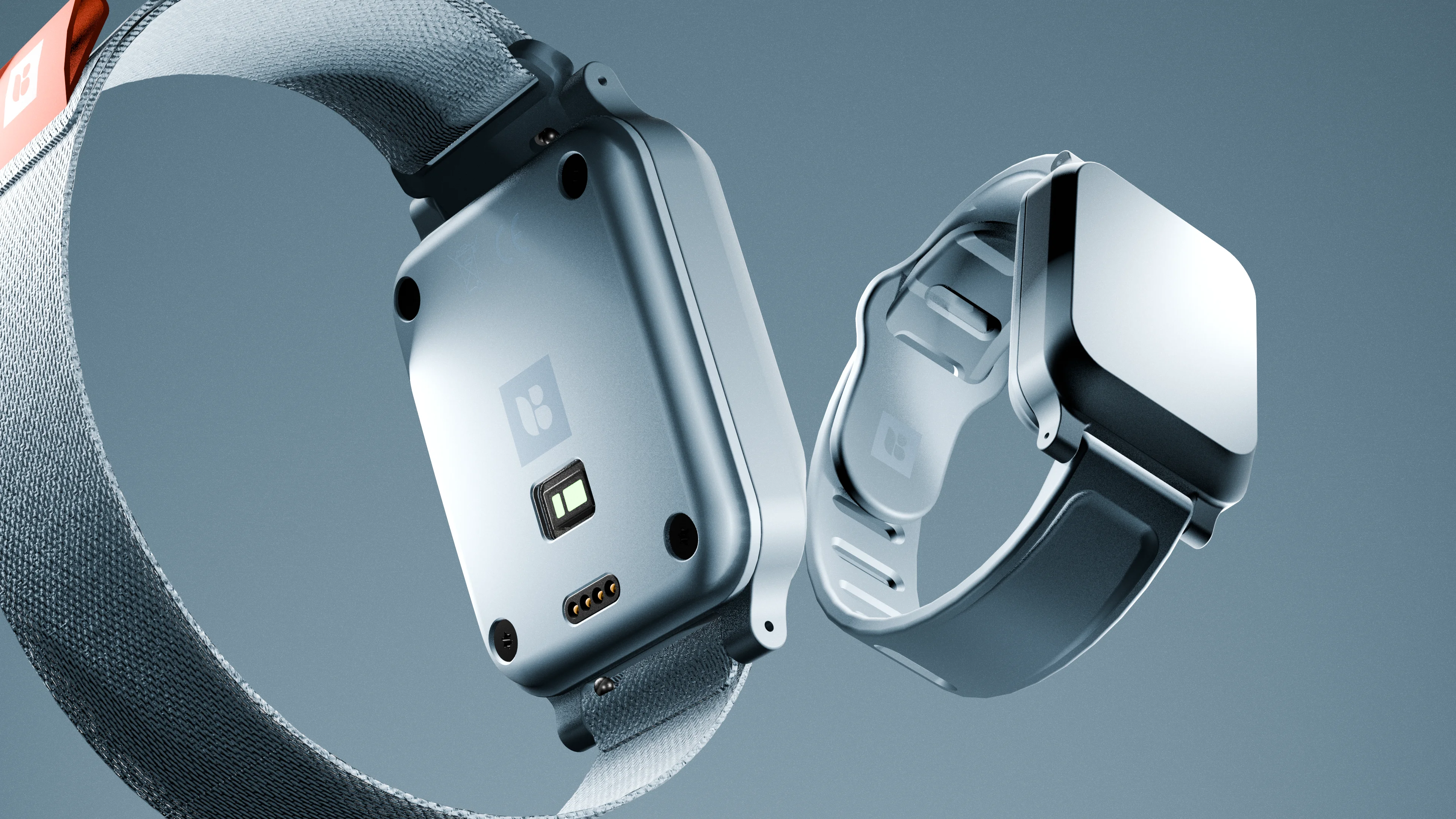
As demand for accessible health monitoring grows, wearable technology is becoming an increasingly important tool for everyday health tracking. I set out to explore this through a compact fitness tracker that integrates biometric and environmental sensors into a discreet wearable. The project stemmed from a personal interest in fitness and health tracking, and gave me the chance to work with embedded electronics, engaging directly with PCB design alongside the physical product design.
Designing a smart wearable device to monitor health biometrics
As demand for accessible health monitoring grows, wearable technology is becoming an increasingly important tool for everyday health tracking. I set out to explore this through a compact fitness tracker that integrates biometric and environmental sensors into a discreet wearable. The project stemmed from a personal interest in fitness and health tracking, and gave me the chance to work with embedded electronics, engaging directly with PCB design alongside the physical product design.
Designing a smart wearable device to monitor health biometrics
As demand for accessible health monitoring grows, wearable technology is becoming an increasingly important tool for everyday health tracking. I set out to explore this through a compact fitness tracker that integrates biometric and environmental sensors into a discreet wearable. The project stemmed from a personal interest in fitness and health tracking, and gave me the chance to work with embedded electronics, engaging directly with PCB design alongside the physical product design.
Designing a smart wearable device to monitor health biometrics
As demand for accessible health monitoring grows, wearable technology is becoming an increasingly important tool for everyday health tracking. I set out to explore this through a compact fitness tracker that integrates biometric and environmental sensors into a discreet wearable. The project stemmed from a personal interest in fitness and health tracking, and gave me the chance to work with embedded electronics, engaging directly with PCB design alongside the physical product design.


Process
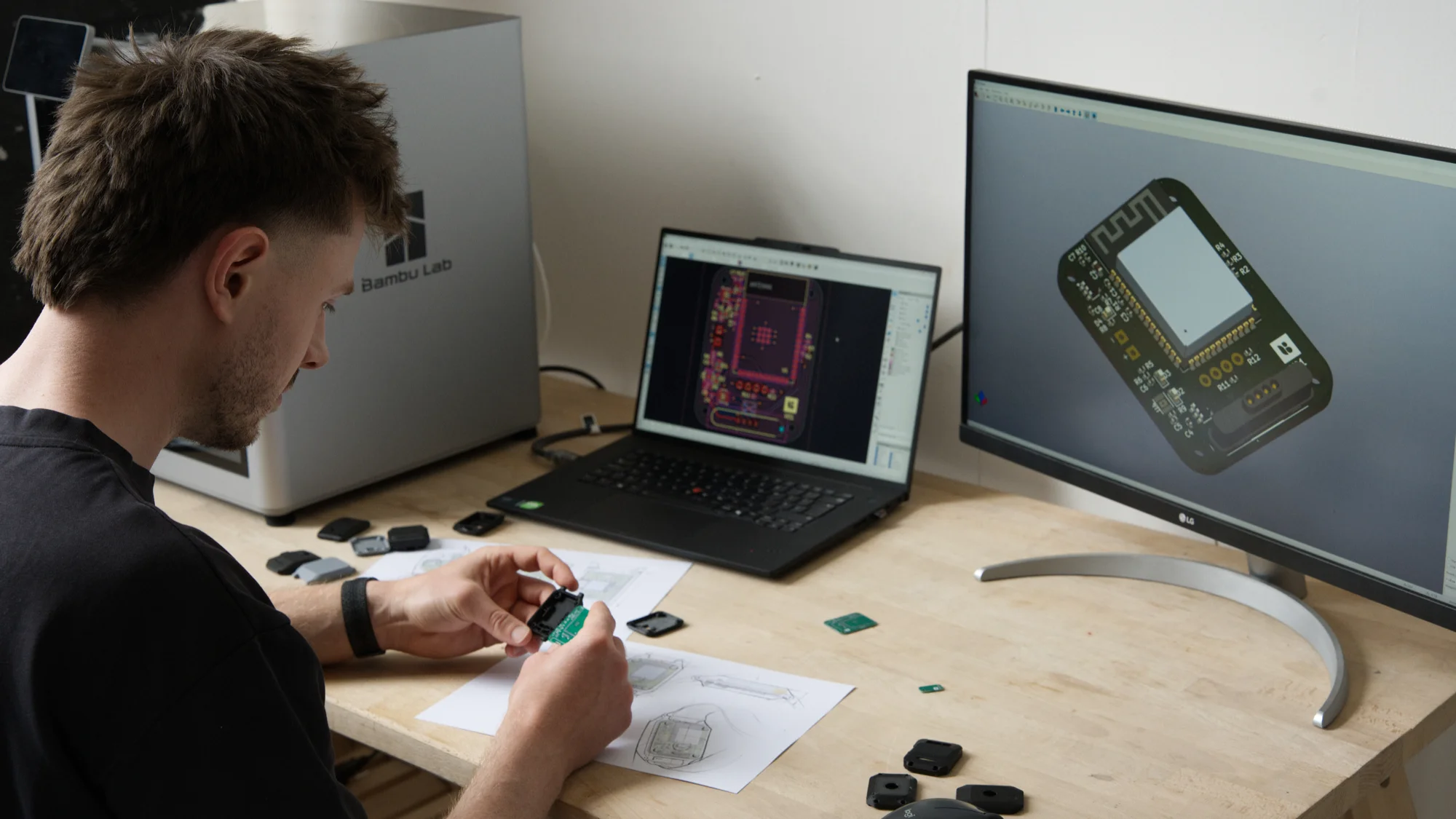
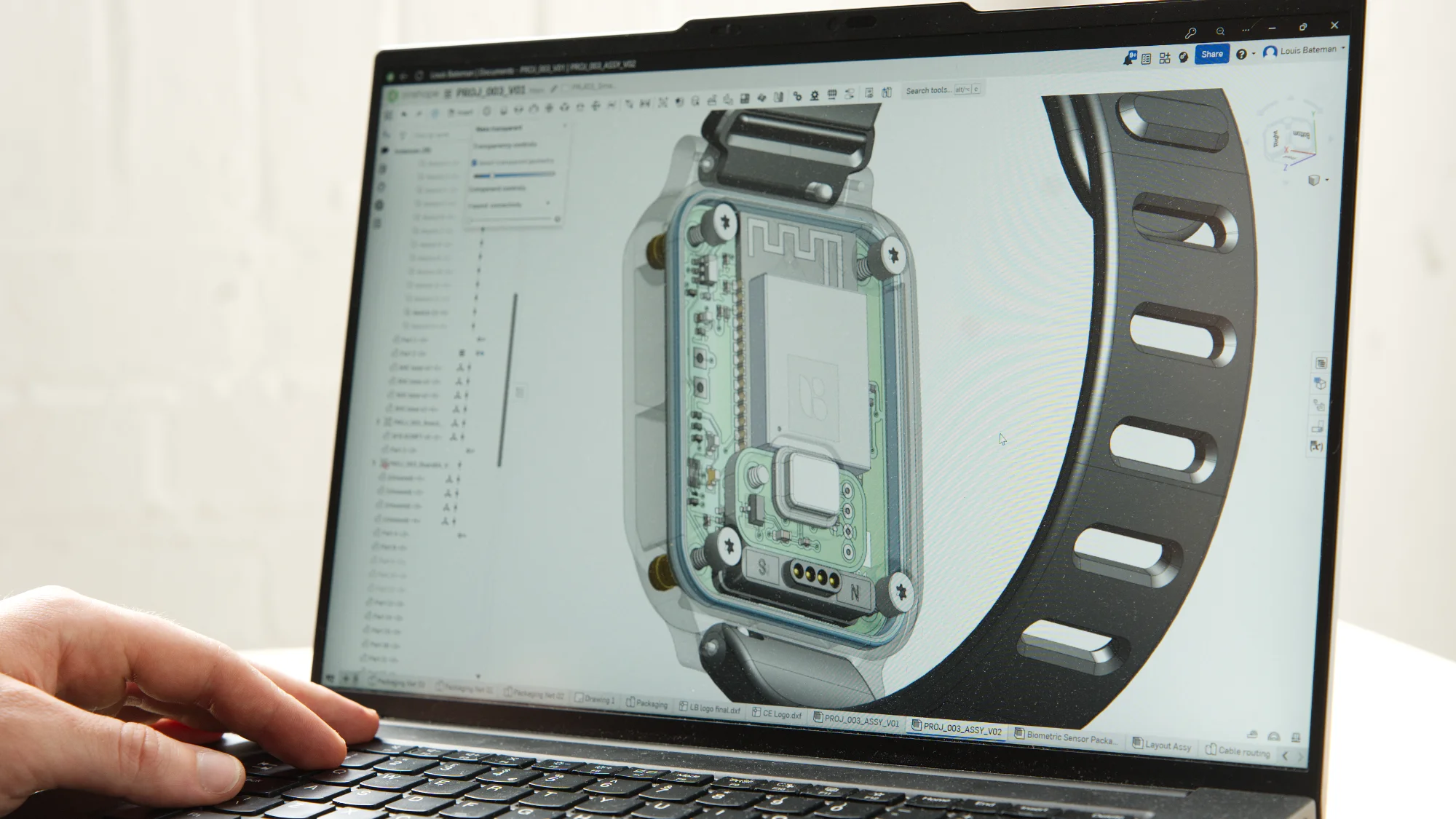
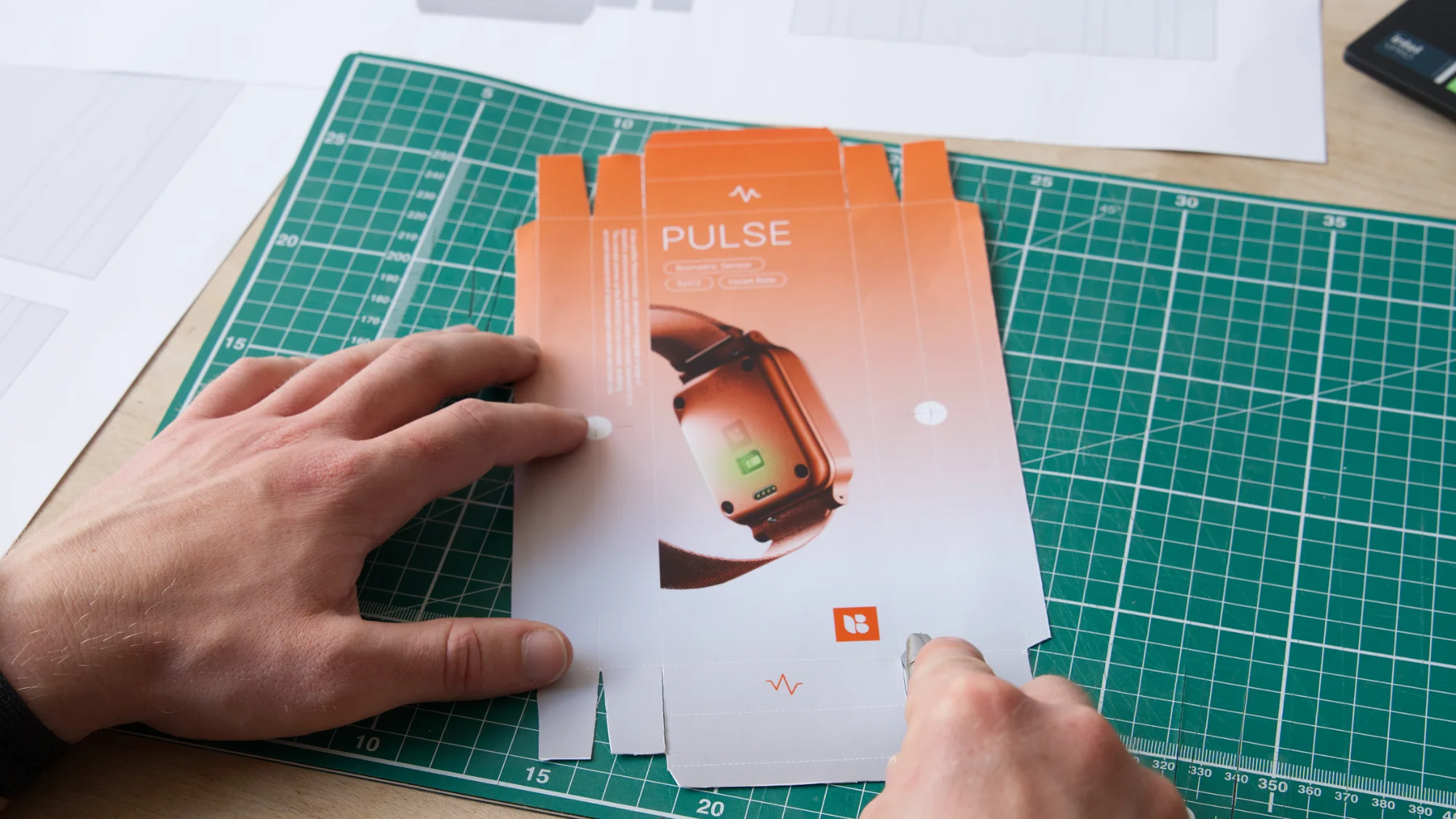
I began with research into existing wearable devices to establish the project's functional requirements, informing the selection of sensors, electronic components and power system. I chose an efficient low-power MCU and a compact 3.7V, 250mAh Li-Po battery to maximise battery life while keeping a slim form factor. I developed and refined PCB schematics in KiCad to achieve the smallest possible layout, before progressing into 3D CAD design of the wearable enclosure. Prototypes of both the PCB and enclosure were produced to validate fit, form and functionality.
Outcome
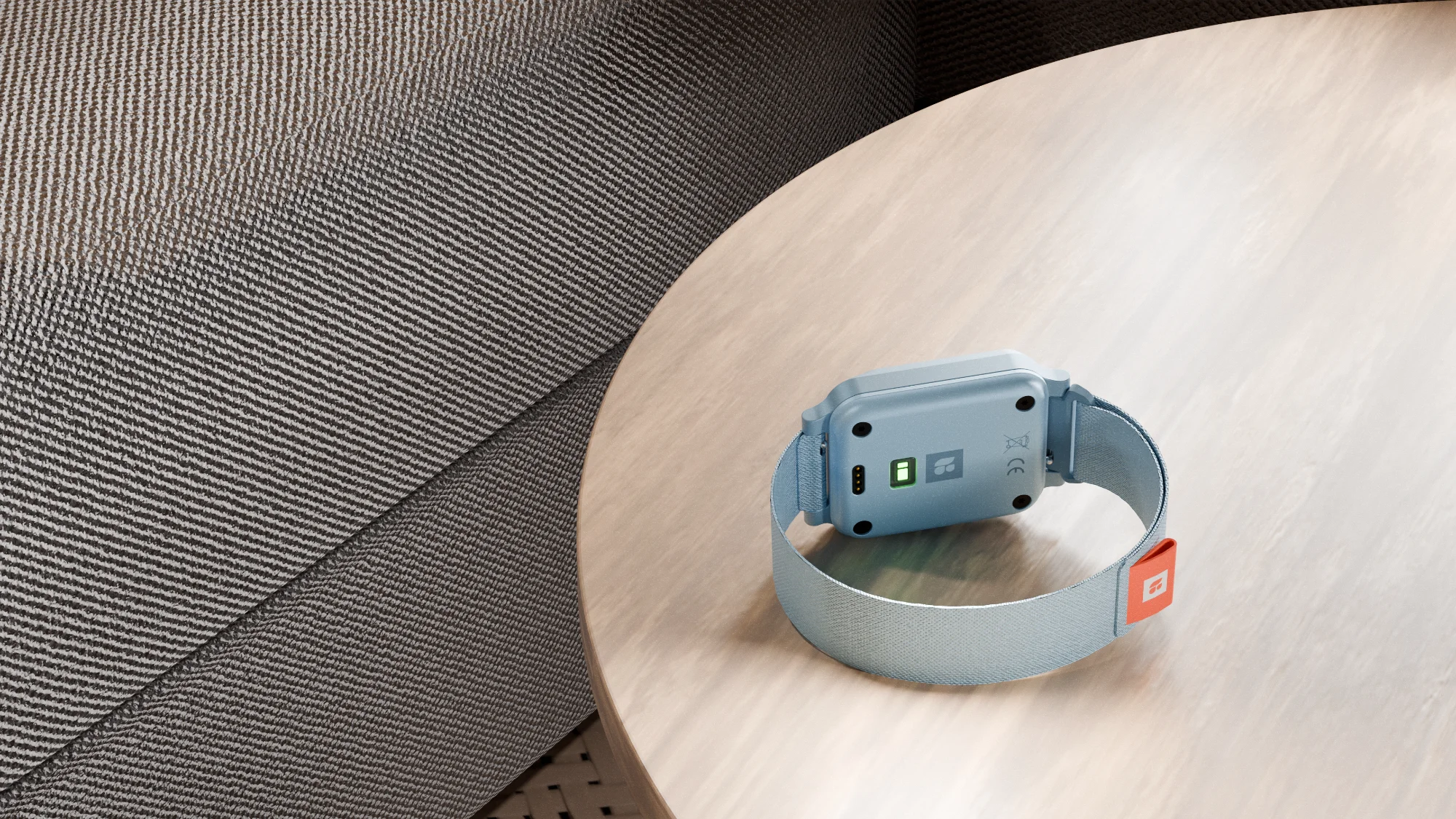
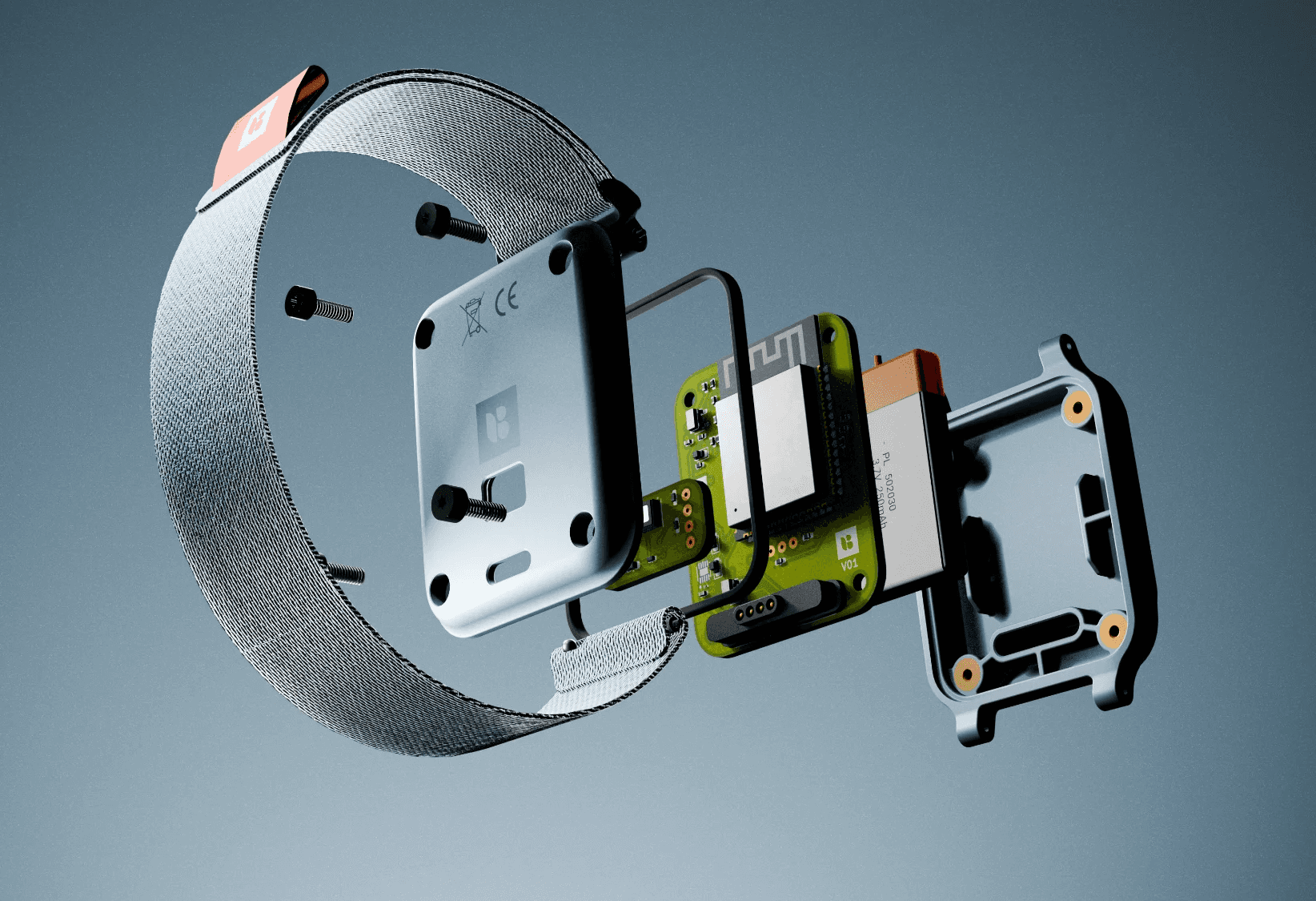
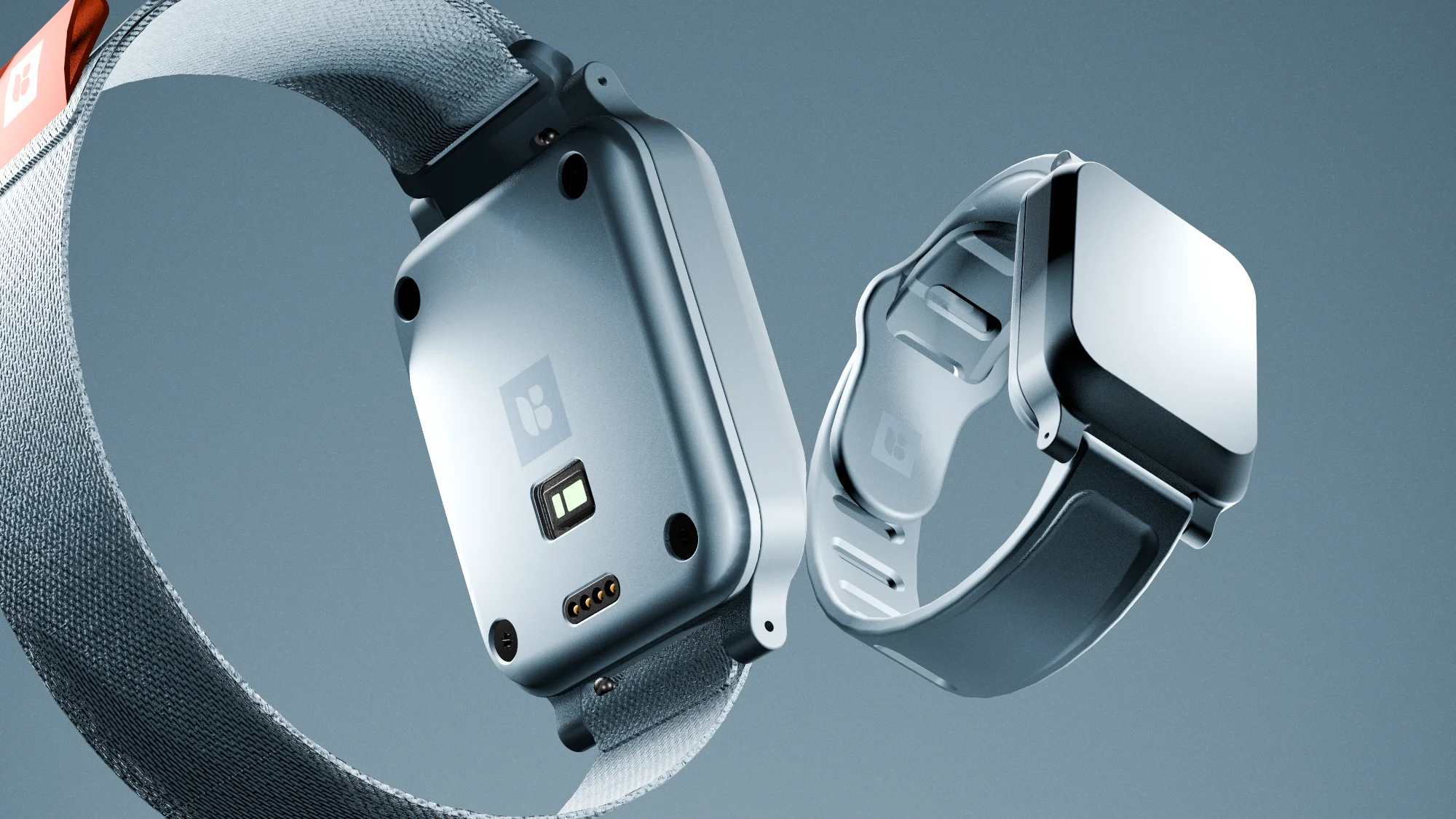
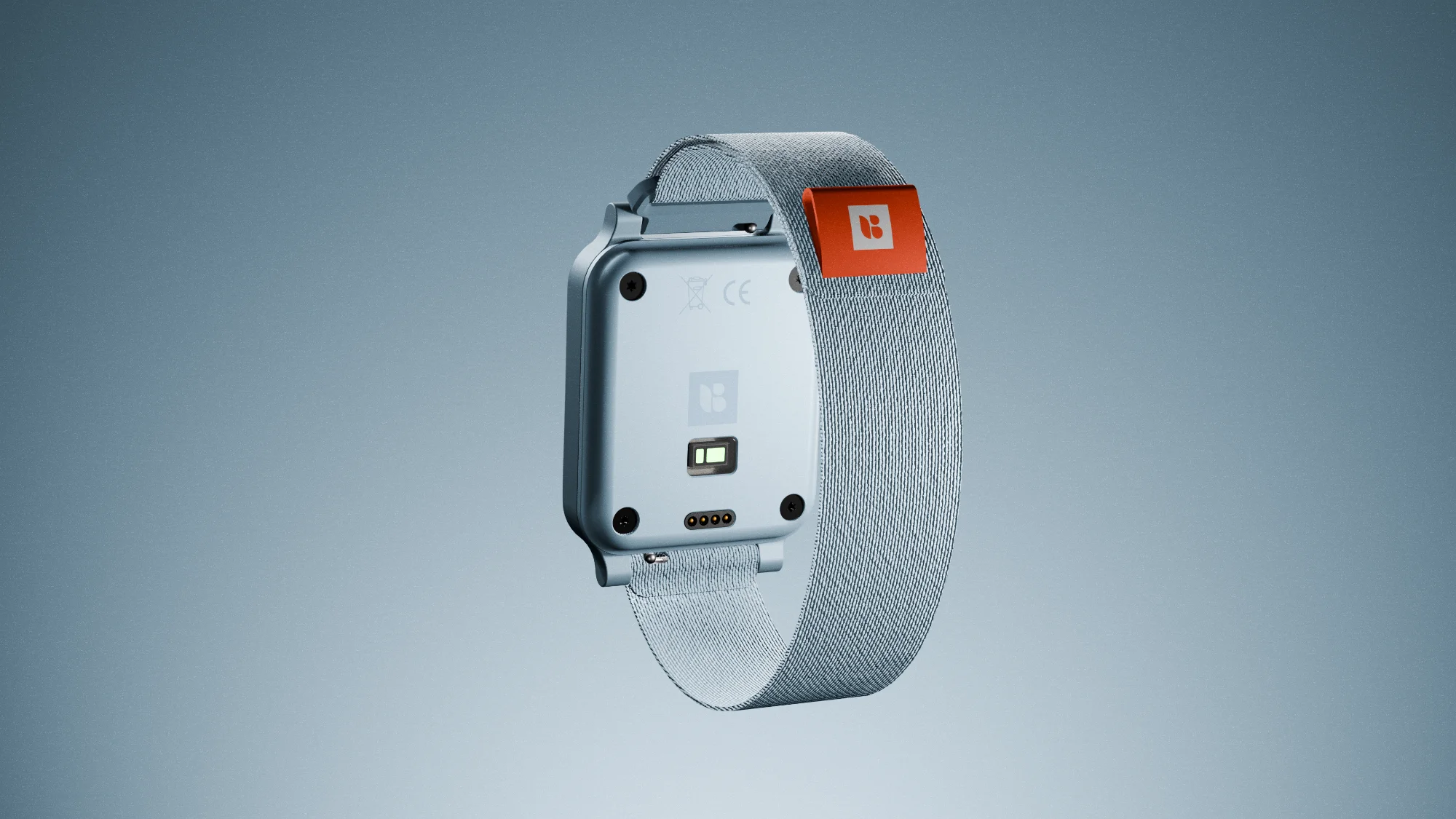
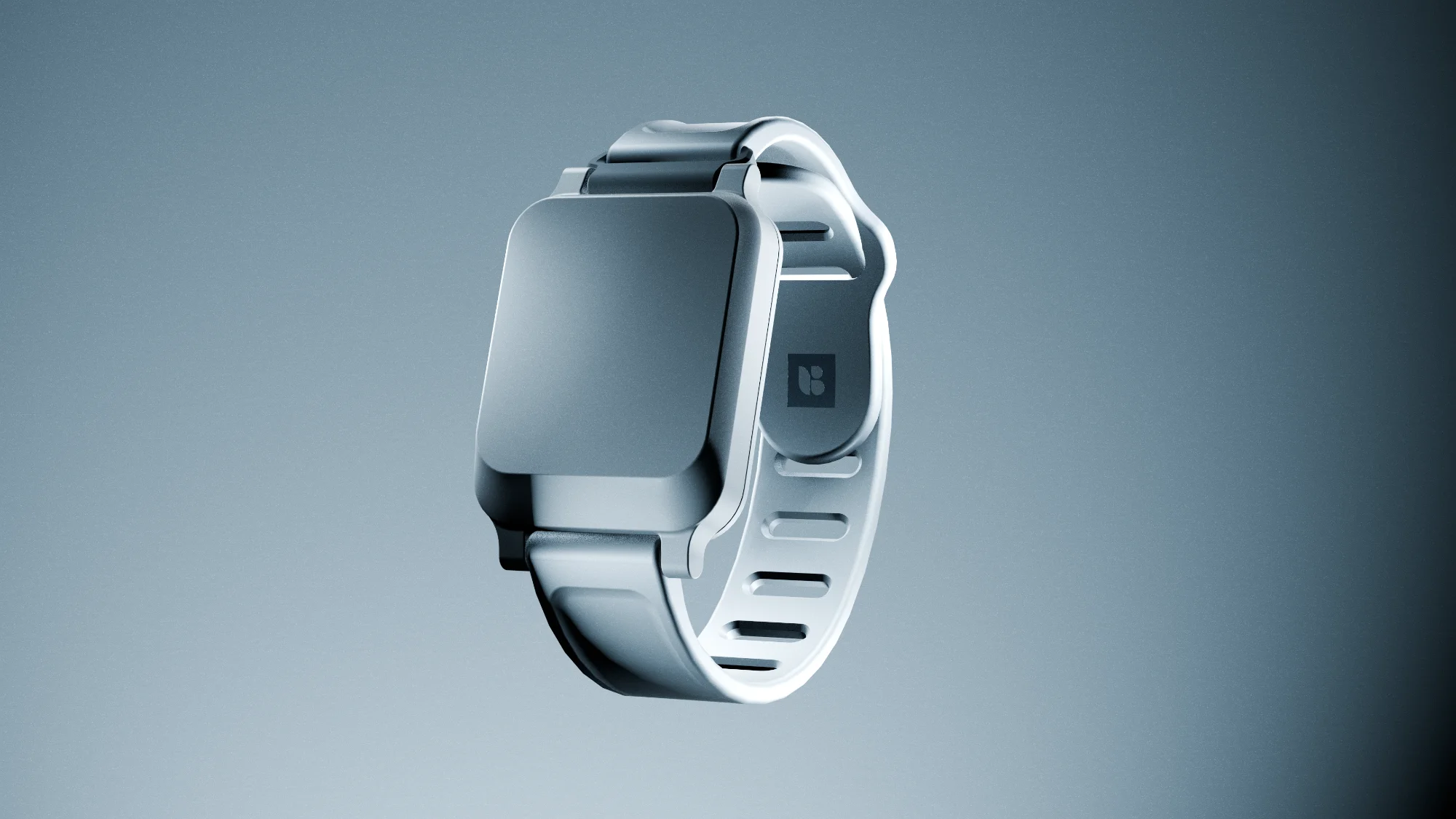
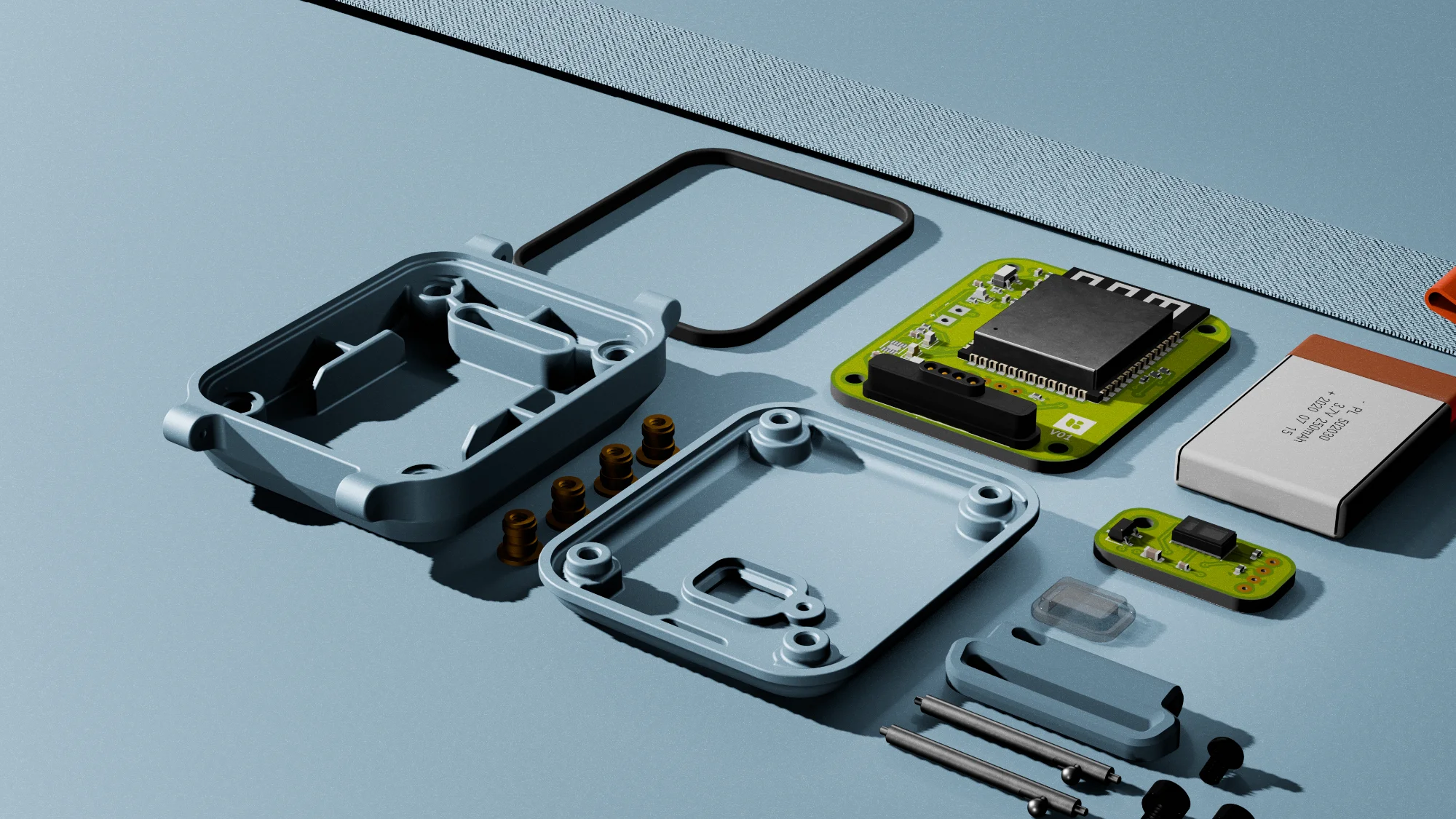
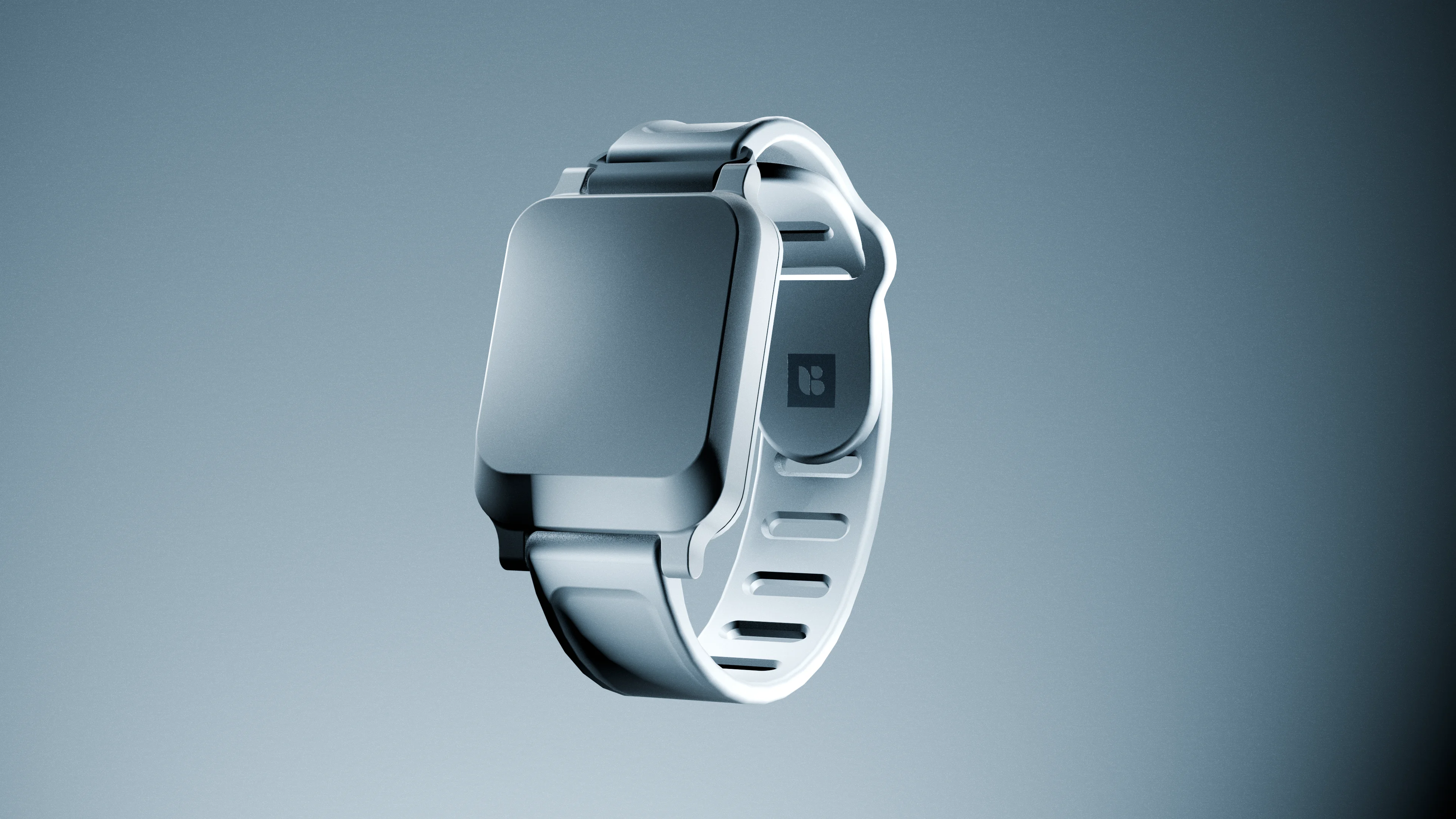
The device is built around an ESP32-S3 microcontroller and powered by a 3.7V, 250mAh Li-Po battery. Charging is delivered via a magnetic pogo pin connection, giving a reliable, water-resistant interface. The enclosure consists of two injection-moulded halves, sealed with a rubber gasket, and is compatible with standard 20mm quick-release straps, supporting a range of bespoke and off-the-shelf materials and styles.
The electronics are split across two PCBs: a primary board managing power, charging and system control, and a breakout sensor board positioning the pulse oximeter closer to the skin to improve signal accuracy. This modular approach also allows for additional sensors, including temperature, motion and environmental monitoring, with all readings intended to be collected and displayed within a companion app.

Process
I began with research into existing wearable devices to establish the project's functional requirements, informing the selection of sensors, electronic components and power system. I chose an efficient low-power MCU and a compact 3.7V, 250mAh Li-Po battery to maximise battery life while keeping a slim form factor. I developed and refined PCB schematics in KiCad to achieve the smallest possible layout, before progressing into 3D CAD design of the wearable enclosure. Prototypes of both the PCB and enclosure were produced to validate fit, form and functionality.
Outcome
The device is built around an ESP32-S3 microcontroller and powered by a 3.7V, 250mAh Li-Po battery. Charging is delivered via a magnetic pogo pin connection, giving a reliable, water-resistant interface. The enclosure consists of two injection-moulded halves, sealed with a rubber gasket, and is compatible with standard 20mm quick-release straps, supporting a range of bespoke and off-the-shelf materials and styles.
The electronics are split across two PCBs: a primary board managing power, charging and system control, and a breakout sensor board positioning the pulse oximeter closer to the skin to improve signal accuracy. This modular approach also allows for additional sensors, including temperature, motion and environmental monitoring, with all readings intended to be collected and displayed within a companion app.
Process
I began with research into existing wearable devices to establish the project's functional requirements, informing the selection of sensors, electronic components and power system. I chose an efficient low-power MCU and a compact 3.7V, 250mAh Li-Po battery to maximise battery life while keeping a slim form factor. I developed and refined PCB schematics in KiCad to achieve the smallest possible layout, before progressing into 3D CAD design of the wearable enclosure. Prototypes of both the PCB and enclosure were produced to validate fit, form and functionality.
Outcome
The device is built around an ESP32-S3 microcontroller and powered by a 3.7V, 250mAh Li-Po battery. Charging is delivered via a magnetic pogo pin connection, giving a reliable, water-resistant interface. The enclosure consists of two injection-moulded halves, sealed with a rubber gasket, and is compatible with standard 20mm quick-release straps, supporting a range of bespoke and off-the-shelf materials and styles.
The electronics are split across two PCBs: a primary board managing power, charging and system control, and a breakout sensor board positioning the pulse oximeter closer to the skin to improve signal accuracy. This modular approach also allows for additional sensors, including temperature, motion and environmental monitoring, with all readings intended to be collected and displayed within a companion app.
Process
I began with research into existing wearable devices to establish the project's functional requirements, informing the selection of sensors, electronic components and power system. I chose an efficient low-power MCU and a compact 3.7V, 250mAh Li-Po battery to maximise battery life while keeping a slim form factor. I developed and refined PCB schematics in KiCad to achieve the smallest possible layout, before progressing into 3D CAD design of the wearable enclosure. Prototypes of both the PCB and enclosure were produced to validate fit, form and functionality.
Outcome
The device is built around an ESP32-S3 microcontroller and powered by a 3.7V, 250mAh Li-Po battery. Charging is delivered via a magnetic pogo pin connection, giving a reliable, water-resistant interface. The enclosure consists of two injection-moulded halves, sealed with a rubber gasket, and is compatible with standard 20mm quick-release straps, supporting a range of bespoke and off-the-shelf materials and styles.
The electronics are split across two PCBs: a primary board managing power, charging and system control, and a breakout sensor board positioning the pulse oximeter closer to the skin to improve signal accuracy. This modular approach also allows for additional sensors, including temperature, motion and environmental monitoring, with all readings intended to be collected and displayed within a companion app.